

Tree Removal for Construction: Steps for a Safer Site
Tree removal for construction starts with a clear plan, not a chainsaw. We first review the site, identify risks, and decide which trees can stay. This careful start protects workers, nearby property, and the future layout of the project.
At ER Tree Care, we prepare each site with safety, timing, and local rules in mind. Whether you need space for a home, driveway, fence, or new yard, proper planning helps prevent delays and unexpected damage.
Assess Existing Trees Before Finalizing Your Building Plans
A site review helps us see tree size, health, lean, root spread, and distance from structures. This step also shows which trees may add value and which ones could block access, foundations, utility lines, or future outdoor areas.
When owners want tree removal for construction, we mark removal and protection zones before equipment arrives. Our team may also suggest reading our guide on how professional tree removal works to better understand the process.
Protect Valuable Trees And Nearby Site Features Carefully
Not every tree needs to come down. Healthy trees may provide shade, privacy, and beauty. Therefore, we protect root zones with barriers and keep heavy machines away from trunks that will remain.
- Mark trees that must stay
- Set safe equipment paths
- Protect roots from soil pressure
- Keep debris away from preserved areas
This approach supports tree removal for construction because it leaves useful trees in place while opening the right areas for grading, planting, and hardscape work.
Confirm Local Permits Before Any Removal Work Starts
Rules can vary by city, county, neighborhood, and property type. Before tree removal for construction begins, owners should confirm permit needs, protected tree rules, and any limits near roads, streams, or shared property lines.
At ER Tree Care, we encourage early planning so permit questions do not stop the schedule later. You can also review our full tree care service options while organizing the wider site plan.
Build A Safe Work Zone For Every Crew
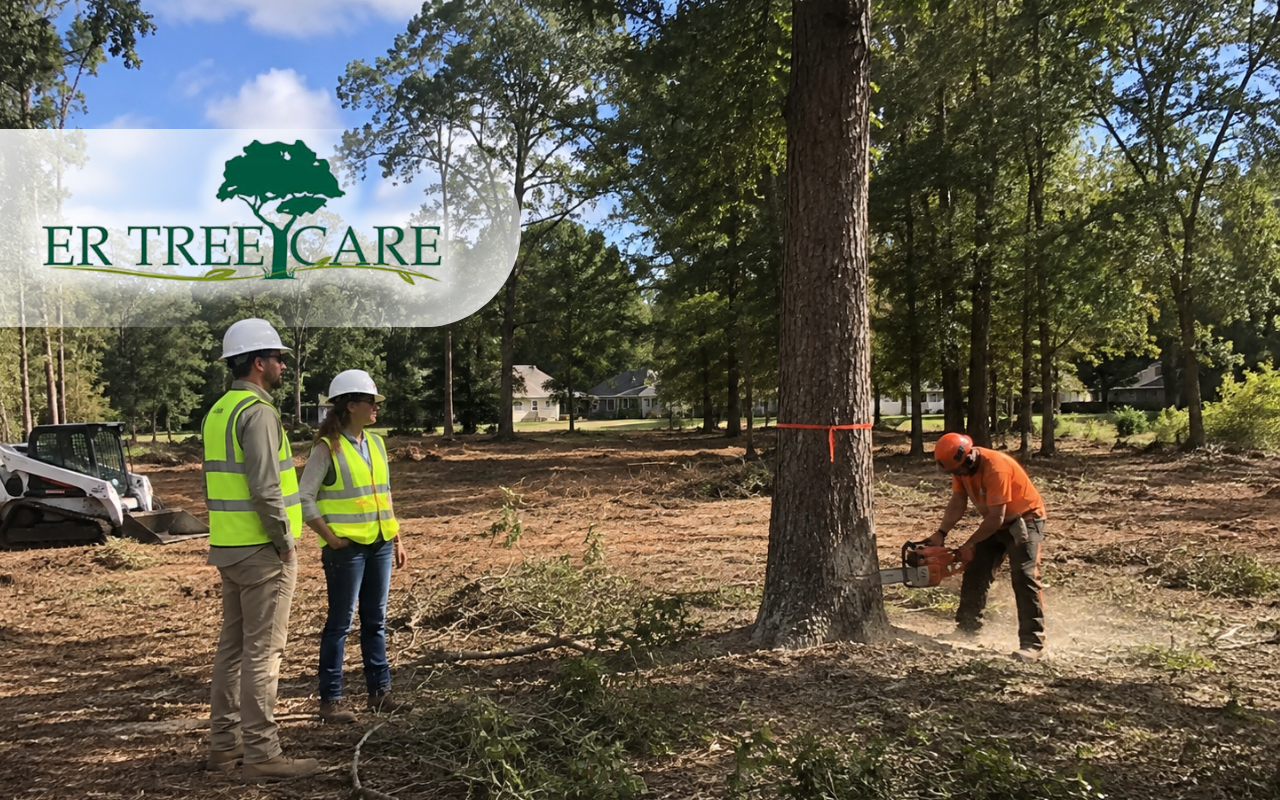
Safety starts before the first cut. We inspect the tree, check its lean, look for weak branches, and set clear drop zones. Workers also need protective gear and communication during every stage.
- Block access to cutting areas
- Use helmets, eye protection, and boots
- Watch for power lines and structures
- Remove loose debris during the job
These steps are especially important during tree removal for fence installation, where narrow spaces can place workers close to homes, sheds, driveways, or neighboring property.
Match Equipment And Crew Skills To Site Conditions
Large trees, slopes, tight yards, and soft soil all require different tools. A small saw may work for light growth, while mature trees may need rigging, cranes, grinders, chippers, or machines that move heavy logs safely.
For dense growth, our brush and small tree clearing services may support site clearing trees. With ER Tree Care, you get a team that matches equipment to the land instead of forcing one method everywhere.
Remove Trees In A Controlled And Efficient Sequence
A planned order keeps the site organized. We usually begin with smaller growth, then remove branches, lower large sections, and take down trunks in a controlled path. This method reduces clutter and gives machines room to move.
- Clear access routes first
- Prune lower and unsafe branches
- Lower large limbs with control
- Cut trunks into movable sections
- Move wood and brush from work areas
When clients need tree removal for construction, this sequence helps protect nearby surfaces and keeps the next construction team ready to enter the site.
Frequently Asked Questions
When should tree removal happen before construction begins?
Tree removal should happen after the site plan is clear but before grading, foundation work, or utility installation starts. Early scheduling gives crews room to work safely and limits delays.
Can healthy trees remain near a new building?
Yes, some healthy trees can stay if roots, branches, and future growth will not affect the structure. A careful review helps decide which trees are safe to preserve.
Is stump removal always needed for construction projects?
Usually, yes. Stumps and large roots can block foundations, fences, driveways, drainage, and planting areas. Grinding or full removal depends on the final use of the space.
What happens to branches, logs, and other debris?
Debris can be chipped, hauled away, recycled, or prepared for reuse. Our debris cleanup options help keep active sites safer and easier to manage.
How can owners prepare before the crew arrives?
Owners should move vehicles, unlock gates, mark private utilities, and keep people and pets away. Clear access helps the crew start faster and avoid preventable problems.
Prepare The Cleared Site For Construction Success
After tree removal for construction, we focus on stumps, roots, soil holes, and leftover debris. A clean finish makes it easier for builders, fence crews, and landscape teams to inspect the ground and begin their work.
At ER Tree Care, we also help owners plan the final cleanup through our professional tree removal service. For project guidance, use our construction site clearing contact page so we can review access, tree size, and the next steps.