

Oak Tree Removal Solutions for Damaged Mature Trees
A large oak adds shade, beauty, and value to your property. However, when it becomes weak, damaged, or unstable, oak tree removal may be the safest way to protect your home and outdoor space.
At ER Tree Care, we guide homeowners through careful decisions before work begins. Our goal is to protect nearby structures, reduce risk, and leave the yard ready for its next use.
Warning Signs Your Oak Tree May Be Failing
Some problems are easy to see, while others develop slowly. A damaged oak tree may show cracked bark, dead limbs, or canopy areas that no longer grow well. Fungal growth near the base can also point to decay.
Other dying oak tree signs include early leaf drop, sudden leaning, and loose soil around the roots. Our team at ER Tree Care can inspect these changes and explain whether pruning, treatment, or oak tree removal is the safer next step. You can also review our guide to identifying tree decline.
- Brown or yellow leaves during the growing season
- Large dead branches that do not produce new buds
- Cracks, cavities, mushrooms, or exposed roots
- A new lean after storms or heavy rain
Smart Planning Before Removing A Mature Oak Tree
Planning matters because removing mature trees can affect homes, fences, gardens, driveways, and utility lines. Before work begins, we review the tree’s height, trunk size, lean, branch spread, and space around it.
For large oak removal, the safest method often involves taking the tree down in controlled sections. Our Louisville tree removal service explains how planning can reduce damage and keep the work area organized.
- Nearby buildings, wires, and landscape features
- Safe work zones and clear escape paths
- Equipment access and debris removal
- Local rules or permits when they apply
Safety Steps That Protect People And Nearby Property
Oak trees are heavy, and falling limbs can cause serious damage. Because of this, oak tree hazards should never be ignored. Clear the work zone, keep people and pets away, and avoid strong wind or storms.
At ER Tree Care, we use protective gear and suitable equipment for each site. Homeowners can also review our tree removal process guide to see why planning and controlled cuts matter during oak tree removal.
Essential Equipment Used For Safe Controlled Tree Removal
The right equipment helps crews manage weight, height, and fall direction. Depending on the site, tree work may require chainsaws, ropes, lifts, wedges, helmets, eye protection, and machines for moving heavy wood.
Our tree removal equipment overview explains how different tools support safer work. For a large oak removal, the setup depends on access, branch size, nearby structures, and available space.
- Chainsaws and pruning saws for cutting
- Ropes and rigging for controlled lowering
- Lifts for safe access to high branches
- Stump grinders for finishing the ground area
How Professionals Handle Large Oak Tree Sections Safely
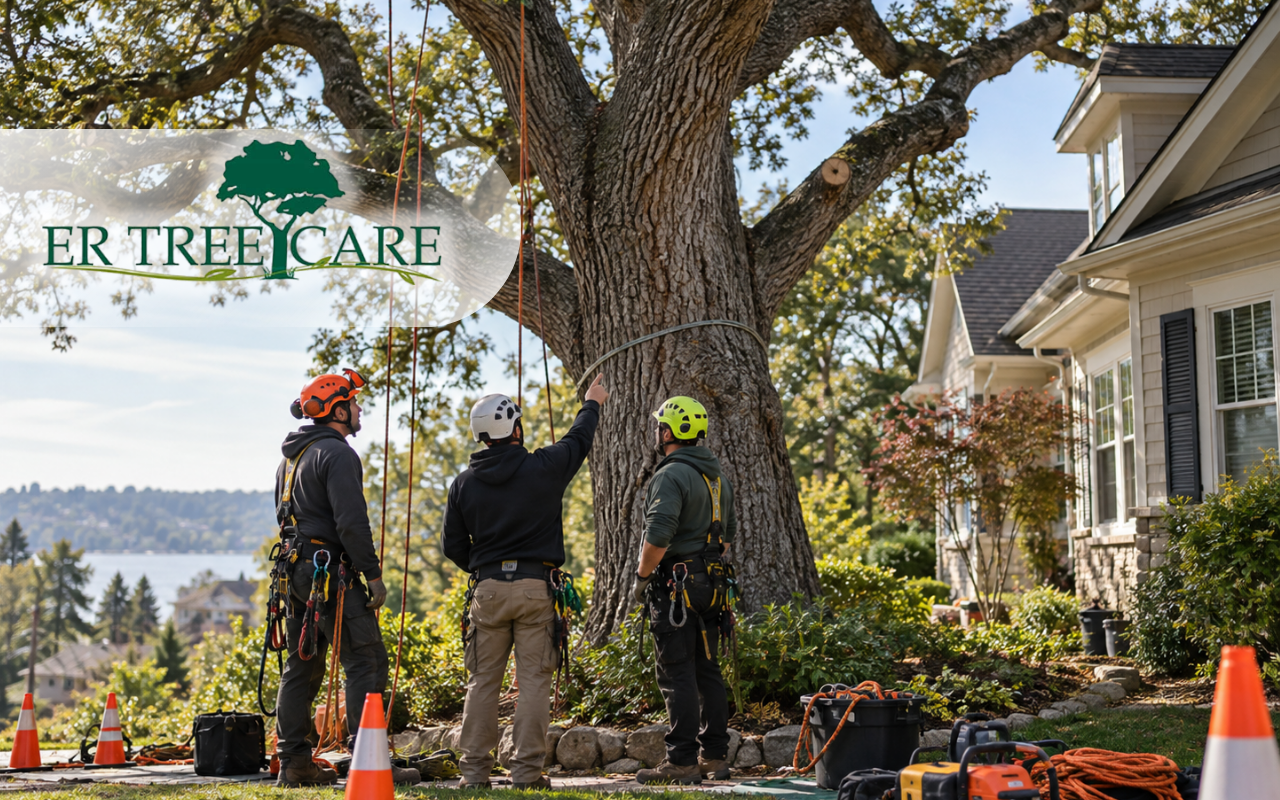
Large trees are often removed from the top down instead of being dropped in one piece. Crews may first remove smaller limbs, then lower heavier sections with ropes. This helps limit impact on lawns, roofs, fences, and plants.
A damaged oak tree may need extra control because weak wood can break without warning. Therefore, oak tree removal should be based on tree condition, available space, and the safest cutting sequence.
Stump Cleanup And Yard Recovery After Tree Removal
Once the tree is down, the stump and debris still need attention. Grinding can lower the stump below the soil line, while smaller wood and branches can be removed, chipped, or reused.
After removing mature trees, homeowners can restore the area with soil, grass, mulch, or new landscaping. At ER Tree Care, we explain practical cleanup options so the space feels safe, neat, and ready to use.
Frequently Asked Questions
When should an oak tree be removed?
Removal may be needed when the tree has major decay, severe storm damage, unstable roots, or a dangerous lean. A professional inspection can confirm whether removal or another service makes sense.
Can a dying oak tree recover?
Some trees can improve when problems are found early. However, advanced decay, major root damage, or widespread dead branches may leave few safe treatment options.
Is large oak removal dangerous?
Yes. The weight of large limbs and trunks creates serious risk, especially near homes or utility lines. Professional equipment and controlled cutting can reduce those hazards.
What happens to the stump afterward?
The stump can often be ground below the surface. The area can then be filled and prepared for grass, mulch, or another landscape feature.
How can I request an inspection?
You can connect with us to discuss the tree, its condition, and the safest next step. We will review the situation and explain available service options.
Keep Your Yard Safer With Professional Tree Care
Healthy trees improve a yard, but unsafe trees can threaten roofs, vehicles, fences, and people. Regular inspections help catch problems early and may reduce emergency work after storms.
When oak tree removal becomes necessary, careful planning makes a major difference. Contact our team to discuss concerns, schedule an assessment, and choose a safe path for your property.