


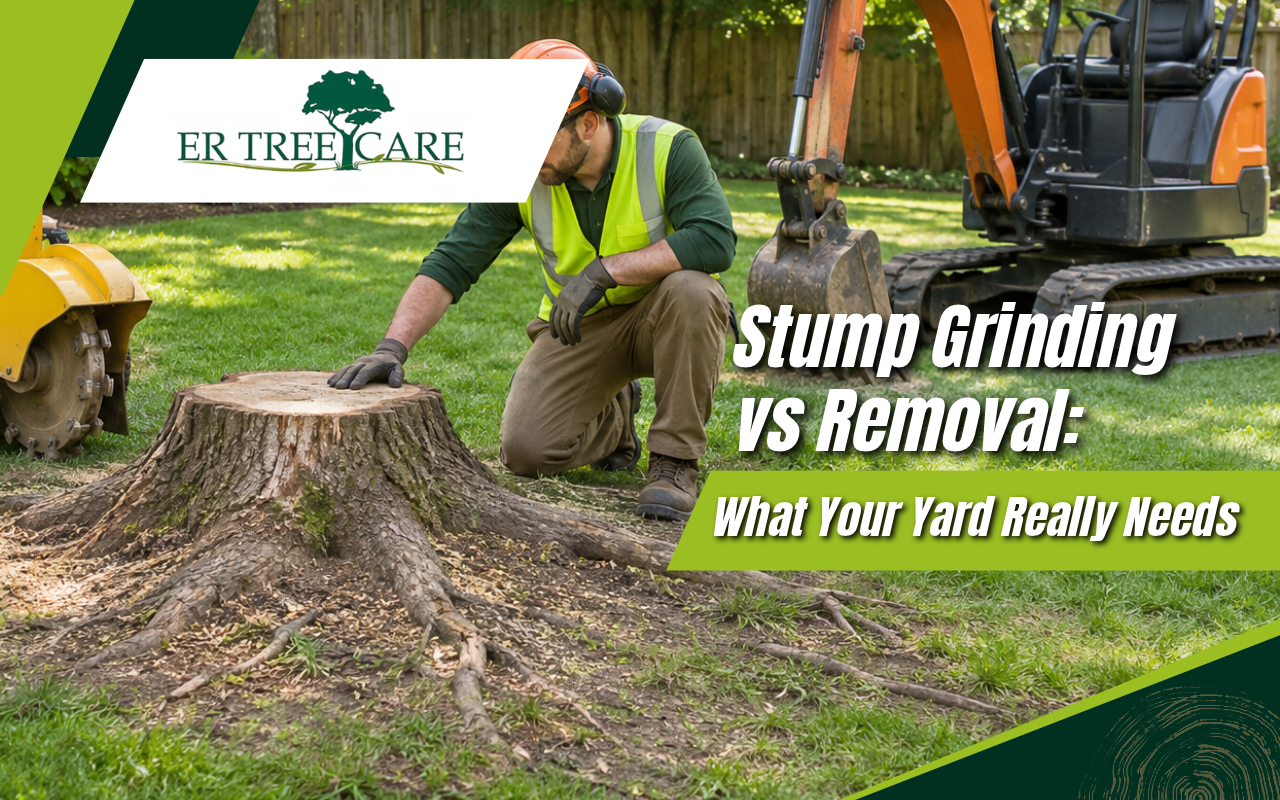
Stump Grinding vs Removal: What Your Yard Really Needs
Choosing between stump grinding vs removal can feel difficult after a tree comes down. You may want a clean yard, a safer walking space, or room for new landscaping. However, each method handles the stump and roots in a different way.
At ER Tree Care, we explain the options clearly before work begins. Your best choice depends on the stump size, future yard plans, root condition, and how much ground disturbance you want.
Key Differences Between Grinding and Complete Stump Removal
The main difference in stump removal vs grinding is how much of the tree remains underground. Grinding cuts the visible stump below ground level. Most roots stay in the soil and slowly break down over time.
Complete removal pulls out the stump and much of its root system. This method creates more soil disturbance, but it can leave the area more open for major landscaping changes.
- Grinding focuses mainly on the stump above and below grade.
- Removal takes out the stump and larger connected roots.
- Grinding usually causes less damage to nearby grass and plants.
How the Stump Grinding Process Works Safely
The stump grinding process starts with checking the area for rocks, nearby structures, and other possible risks. A grinding machine then cuts the stump into small wood chips until it reaches the planned depth below the soil.
Our team at ER Tree Care can explain what to expect through our professional stump grinding service. After grinding, the area can often be filled and prepared for grass or simple landscaping.
Landscape Changes After Grinding or Full Removal
Stump grinding vs removal can affect your yard in very different ways. Grinding usually leaves the surrounding soil mostly in place. Therefore, nearby plants, lawn areas, and garden beds may face less disturbance during the work.
Full removal creates a larger hole because crews must reach below the stump. You may need extra soil and leveling afterward. Still, this option can work well when you need completely open ground for a new project.
Managing Leftover Roots After Stump Work Ends
Leftover tree roots are common after grinding because the machine does not remove the full underground system. In many cases, these roots naturally decay and become part of the soil. Some roots may take longer depending on the tree type.
If you are concerned about underground roots, read our guide about what happens to tree roots. At ER Tree Care, we also review the site before recommending stump grinding vs removal for long-term results.
- Old roots may slowly soften and decay underground.
- Some tree types can send up new shoots.
- Large roots may affect future digging or construction plans.
Yard Goals That Shape Your Best Choice
Your plans for the area should guide your choice. If you want grass, flowers, or a simple garden bed, grinding may provide enough space. It also keeps the job focused on the stump instead of opening a large section of soil.
When removing tree stumps for a patio, structure, or major redesign, complete removal may make more sense. Our guide on ways to remove a tree stump explains several common approaches.
Professional Support Makes Stump Projects More Manageable
Professional help can make stump work safer and easier. Crews use equipment designed for tough wood, tight spaces, and different ground conditions. They can also identify nearby features that may affect the work before the machine starts.
When comparing stump removal options, look at experience, equipment, cleanup plans, and clear communication. You can also review our guide to choosing a reliable stump grinding team before scheduling service.
- Ask how deep the stump will be ground.
- Confirm what happens to wood chips and debris.
- Discuss nearby fences, utilities, and landscaping before work starts.
Frequently Asked Questions
Which method causes less damage to my yard?
Grinding usually causes less ground disturbance because most roots stay underground. Full removal needs more digging, so nearby soil and grass may need extra repair afterward.
Can roots keep growing after stump grinding?
Some leftover tree roots may produce small shoots, depending on the tree species. However, many roots slowly decay after the main tree and stump are gone.
How deep does stump grinding usually go?
The depth depends on the site and future plans. A professional can choose a suitable grinding depth based on whether you want grass, planting, or another landscape feature.
Is complete stump removal always necessary?
No. Many yards do not need full removal. Grinding can be a practical choice when the main goal is clearing the visible stump with less soil disruption.
Can professionals recommend the right stump method?
Yes. A site review can help compare stump grinding vs removal based on stump size, root spread, access, and your plans for the space.
Plan Your Stump Project With Clear Guidance
The right choice depends on what you want from your yard. Grinding works well for faster cleanup and limited ground disturbance, while removal may fit projects that need deeper clearing. Both methods can solve different landscape problems.
At ER Tree Care, you can discuss your property needs before making a decision. If you need help comparing removing tree stumps and other stump removal options, reach our team for clear guidance and choose the approach that fits your plans.