

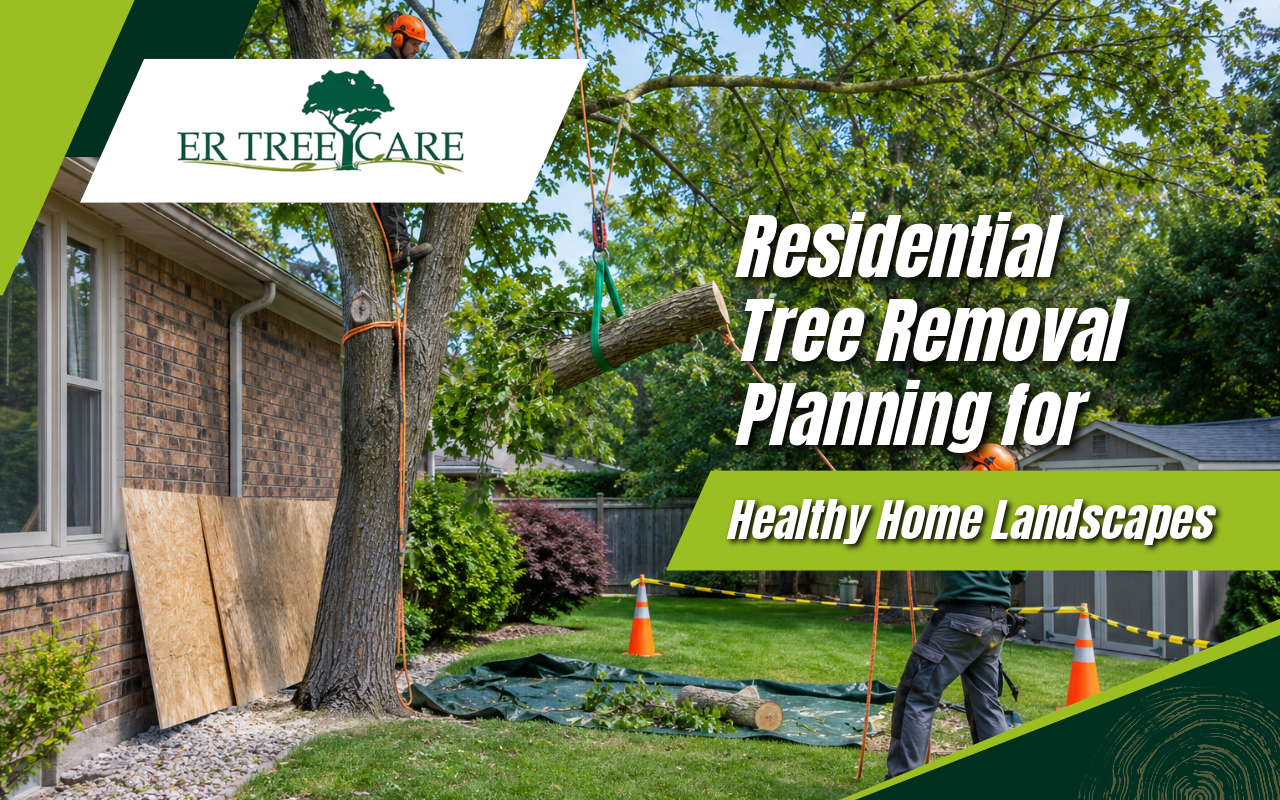
Residential Tree Removal Planning for Healthy Home Landscapes
Residential tree removal can feel difficult when a large tree looks unsafe, damaged, or too close to your home. At ER Tree Care, we guide homeowners through choices that protect people, property, and the landscape.
Knowing what to look for makes the process easier. Tree health, access, cleanup, and local rules all matter. With the right plan, residential tree service becomes less stressful and more focused on safety.
Common Warning Signs Around Trees Near Homes Today
Cracked branches, deep trunk splits, peeling bark, or exposed roots can point to a serious problem. A leaning tree may also become dangerous after wind, heavy rain, or soil movement. These signs need attention when they appear near roofs, cars, fences, or walkways.
- Watch for hanging or broken limbs.
- Check for new cracks in the trunk.
- Look for roots lifting soil or pavement.
- Notice sudden leaning after storms.
When damage looks severe, residential tree removal may be the safest choice. Our team can explain when trimming may be enough.
Disease And Decay Can Weaken Healthy Trees Quickly
Fungus, soft wood, dead branches, and unusual leaf loss can signal decay or disease. Mushrooms near the base may also suggest damage inside the tree. Early attention can show whether treatment, pruning, or professional tree removal makes sense.
Some problem species can also spread quickly or affect nearby plants. Our guide to invasive trees in Louisville explains what homeowners should watch for in local landscapes.
Routine Tree Care Reduces Future Removal Risks Greatly
Regular care can lower the chance of sudden tree failure. Pruning dead branches, watering young trees, and adding mulch support healthier growth. Good maintenance also makes it easier to notice changes before they become serious safety concerns.
- Prune damaged or rubbing branches.
- Keep mulch away from the trunk.
- Water deeply during dry periods.
- Check trees after strong storms.
At ER Tree Care, we help homeowners build practical care plans. When removal becomes necessary, our tree removal service options explain what to expect.
DIY Tree Removal Has Important Limits And Risks
Small trees may look simple to cut, but home tree removal can become dangerous fast. Heavy branches can shift, tools can kick back, and the trunk may fall in an unexpected direction. Risks rise near a home, driveway, or utility line.
Before starting, compare the size of the job with your experience. Our guide on how to remove a tree safely can help you understand the basic planning involved. For larger trees, residential tree removal is usually safer with trained professionals.
Professional Crews Bring Safer Tools And Planning Practices
A qualified tree removal contractor can assess the tree, plan the area, and use suitable equipment. Professional crews may use ropes, lifts, saws, and other tools to control branches and reduce the chance of damage during a complex project.
At ER Tree Care, we focus on clear communication before work begins. We explain the planned cuts, access needs, cleanup steps, and whether professional tree removal is the right solution. This gives homeowners a clear picture of the process.
Site Conditions Shape Every Tree Removal Plan Carefully
Tree size is only one part of the job. Access, buildings, slope, power lines, and open space affect the safest approach. A tight yard may require more careful lowering of branches instead of dropping large sections freely.
- Check access for crews and equipment.
- Identify nearby roofs, fences, and wires.
- Plan a clear work and drop zone.
- Decide how wood and debris will leave.
After residential tree removal, stump work may also be useful. Our stump grinding service information explains how leftover stumps can be handled.
Frequently Asked Questions
When should a tree be removed from home?
Removal may be needed when a tree is badly damaged, unstable, dead, or too close to structures. A professional review can help confirm the safest next step.
Can I remove a small tree myself?
Some small trees may be manageable, but risk depends on location, tools, and experience. Never attempt work near power lines or large structures.
Does tree removal always include the stump?
No. Stump grinding is often a separate service, so ask what the planned work includes before the project begins.
How long does professional tree removal take?
Timing depends on tree size, access, condition, and cleanup. Complex removals require more planning.
Who should I contact for an assessment?
You can reach our team for an assessment and discuss the condition of your tree, the site, and the safest options.
Safe Cleanup Keeps Your Landscape Looking Finished Afterward
Cleanup matters after the cutting is complete. Branches, logs, sawdust, and debris should be removed or reused. Wood chips may work as mulch, while larger sections can be cut for disposal or other uses.
At ER Tree Care, residential tree removal does not end when the tree comes down. We help homeowners think through cleanup, stump needs, and the condition of the surrounding yard so the space feels safe, useful, and ready for what comes next.