

Protect Your Home With Tree Removal After Heavy Rain
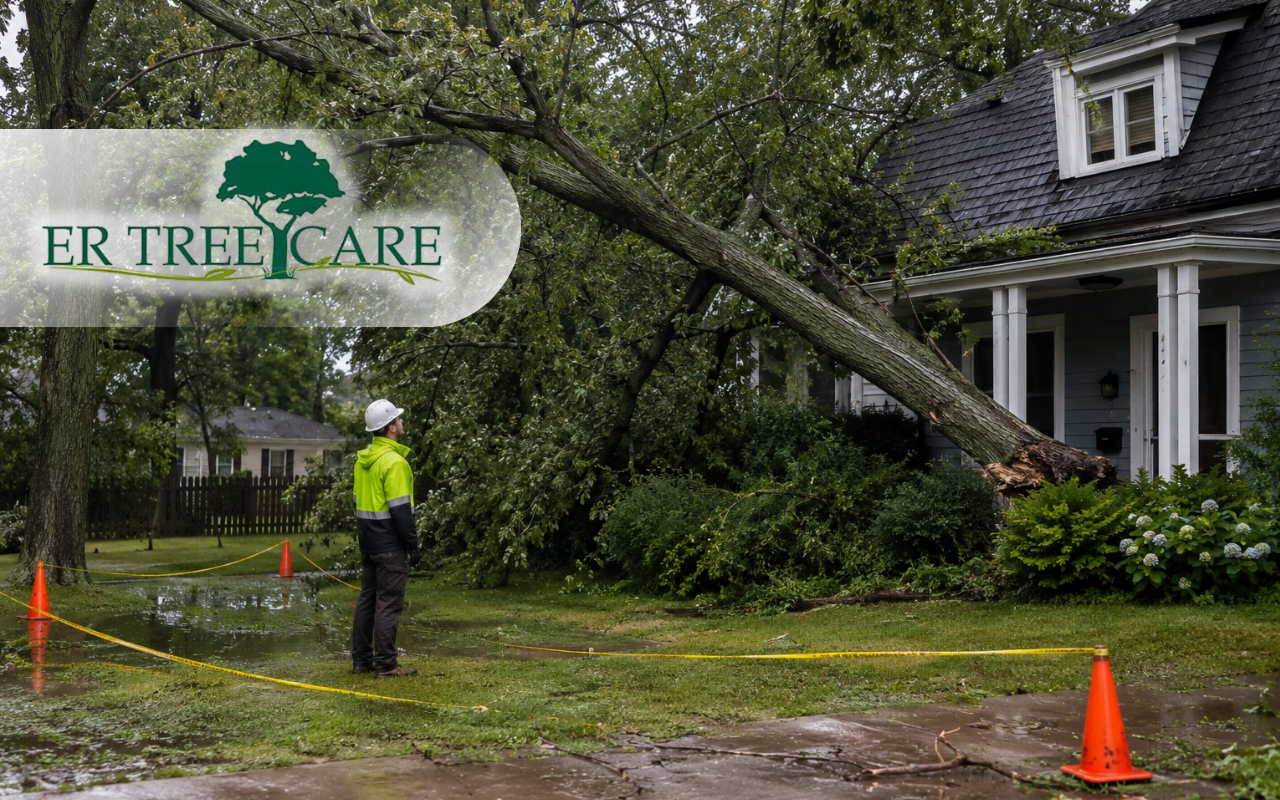
Heavy storms can turn a strong backyard tree into a serious safety concern. Tree removal after heavy rain may be needed when wet soil, weak roots, or broken limbs place your home, family, driveway, or nearby power lines at risk.
At ER Tree Care, we guide homeowners through clear steps after severe weather. This guide explains what to inspect, when to call for help, and how to restore your yard with less stress.
Warning Signs That Trees Became Unsafe After Storms
Start by checking the trunk, branches, and ground from a safe distance. Rain-damaged trees may lean, split, or show fresh cracks. A tree leaning after rain can mean its roots no longer have a firm hold.
- Look for lifted soil near the trunk base.
- Check for hanging or broken heavy branches.
- Notice new cracks, bends, or trunk movement.
- Watch for exposed tree roots after rain.
Avoid walking under weak limbs or touching power lines. Our guide to safe tree removal steps explains why careful planning matters before any cutting begins.
Saturated Ground Raises Serious Tree Failure Risks
After long rainfall, the ground may become soft and loose. This saturated soil tree risk is greater for tall trees, shallow-rooted species, and trees already weakened by age, disease, or past storms.
When roots lose support, the whole tree may shift without much warning. At ER Tree Care, we recommend quick checks after major storms, especially when a tree stands near a roof, fence, road, or play area.
How Can You Judge Immediate Tree Danger Safely?
Focus on what the tree could hit if it falls. A large tree close to a home needs faster attention than a small tree in an open space. However, even smaller trees can block paths or damage vehicles.
- Check the direction and size of the lean.
- Look for moving soil around the roots.
- Listen for cracking during light wind.
- Keep people and pets away from danger.
For added guidance, review our advice on a tree leaning toward your house. Never try to pull, push, or cut a damaged tree alone.
Prompt Professional Inspections Prevent Bigger Property Problems
A fast inspection can reveal hidden trunk cracks, root movement, or decay that is hard to see from the ground. Tree removal after heavy rain is safer when trained professionals first study the full tree and the area around it.
Our team at ER Tree Care checks the fall zone, nearby structures, branch weight, and soil condition. This helps us decide whether the tree needs removal, support, pruning, or simple monitoring.
Safe Removal Planning Protects People And Nearby Structures
Large damaged trees often need to be removed in sections. Crews may lower branches with ropes before cutting the trunk into smaller pieces. This controlled process limits damage to roofs, gardens, fences, and nearby trees.
- Create a clear work and drop zone.
- Use proper ropes, saws, and safety gear.
- Block access for children, pets, and visitors.
- Plan branch, log, and stump cleanup early.
See our storm damage removal process for more details about handling dangerous conditions after severe weather.
Some Damaged Trees May Recover With Proper Care
Not every weakened tree must come down. A healthy tree with limited damage may recover through pruning, cabling, bracing, or improved drainage. A professional inspection is still important before choosing any repair.
Light mulch can protect roots and reduce soil loss, but it should not touch the trunk. When damage is too severe, tree removal after heavy rain may remain the safest choice for the property.
Frequently Asked Questions
When should a storm-damaged tree be removed?
Removal may be urgent when roots lift, the trunk splits, or the tree leans toward a building. A fallen tree after rain also needs quick professional handling.
Can a leaning tree become stable again?
Some young trees may recover with support. Large trees with root movement usually need a professional review before any decision.
Are exposed roots always a serious problem?
Small exposure may be manageable. Fresh lifting, broken roots, or loose soil can signal a higher fall risk.
Should I remove broken branches myself?
Only remove small branches from the ground. Heavy, high, or hanging limbs should be handled by trained crews.
How soon should I request an inspection?
Request help as soon as you notice leaning, cracking, root movement, or blocked access after a storm.
Restore Your Yard And Reduce Future Storm Damage
After removal, clear debris, repair low soil areas, and choose new plants suited to local rain patterns. Deep-rooted trees, shrubs, and groundcover can improve soil strength and reduce erosion over time.
Good drainage, regular pruning, and seasonal checks also lower future hazards. These simple habits make tree removal after heavy rain less likely during the next storm.
With ER Tree Care, you receive clear guidance from inspection through cleanup. Review our professional removal service, then request a tree safety inspection when tree removal after heavy rain becomes a concern.