

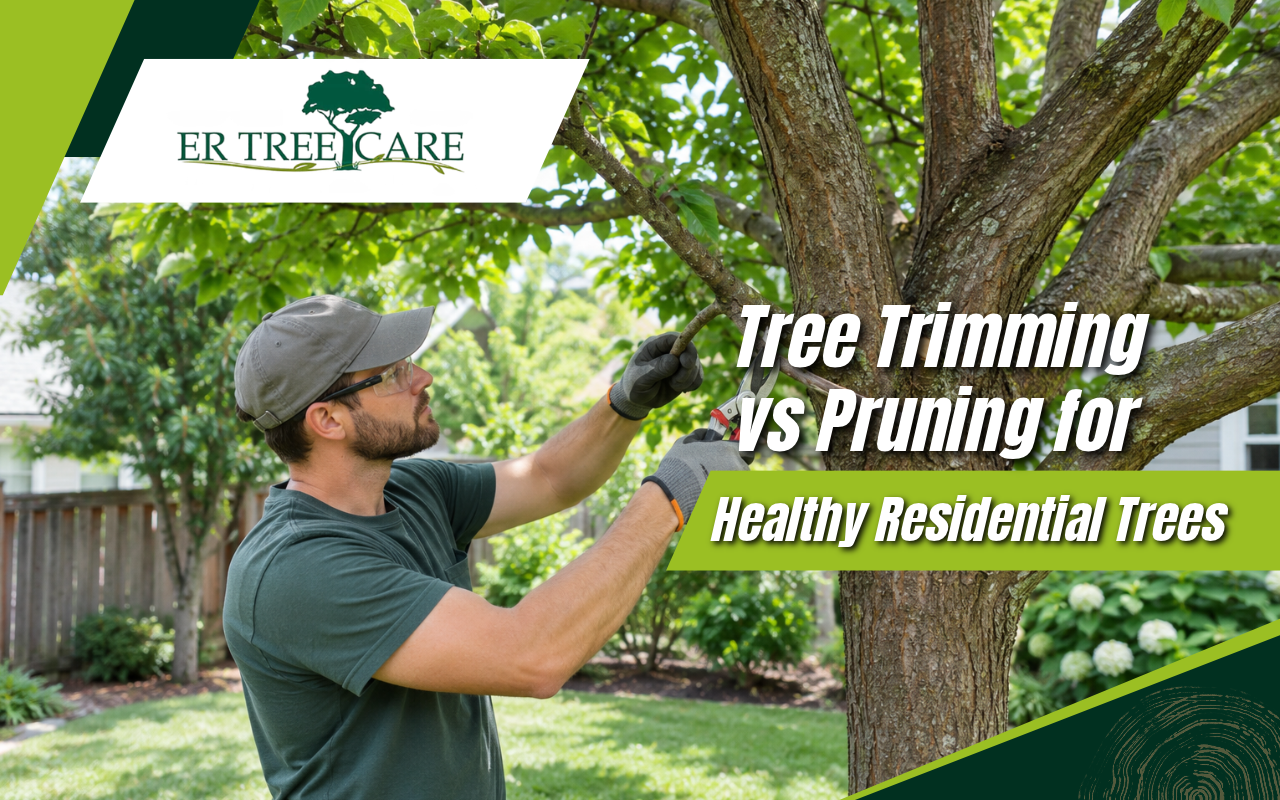
Tree Trimming vs Pruning for Healthy Residential Trees
Understanding tree trimming vs pruning can make daily tree care much easier. Both methods remove branches, but they serve different goals. Trimming mainly controls shape, clearance, and appearance, while pruning focuses more on tree health, structure, and future growth.
At ER Tree Care, we guide homeowners toward the right approach for each tree. The best choice depends on branch condition, tree age, location, season, and safety concerns. Knowing these differences can help you protect your landscape and avoid unnecessary cuts.
How Tree Trimming Supports Shape and Safety
Tree trimming usually removes branches that are overgrown, low, crowded, or extending into unwanted spaces. Trimming tree branches can improve clearance around roofs, sidewalks, driveways, and nearby plants. It can also give the canopy a cleaner and more balanced shape.
Common tree trimming methods focus on controlling growth without removing more branches than necessary. Our tree trimming service options can help homeowners manage larger trees where height, heavy limbs, or nearby structures make the work more difficult.
Key Benefits Homeowners Gain From Regular Trimming
Regular trimming can support both appearance and safety. Removing problem branches helps reduce unwanted contact with buildings and improves access around the property. It can also open crowded areas of the canopy so sunlight reaches nearby grass, shrubs, and garden plants.
- Creates better clearance around homes and walkways.
- Reduces problems caused by crowded or rubbing branches.
- Maintains a cleaner and more balanced tree shape.
- Helps identify weak branches before they become larger concerns.
Signs That Show Trees May Need Trimming
Knowing when trees need trimming starts with regular observation. Branches touching a roof, hanging over a driveway, blocking signs, or growing into crowded areas may need attention. Broken limbs after strong winds should also be checked quickly because they can create safety risks.
Seasonal timing matters as well. Many trees respond well to work during their dormant period, although the best schedule can vary by species. Our guide about the best time for tree trimming explains important timing factors homeowners should consider.
How Proper Pruning Protects Long-Term Tree Health
Pruning is more focused than general trimming. In tree pruning vs trimming, pruning removes selected branches to improve structure, remove damaged wood, and guide healthy growth. The goal is not only appearance. Each cut should support the tree’s condition and natural form.
Professional tree pruning can also address crossing limbs, weak branch connections, deadwood, and some damaged areas. At ER Tree Care, we consider the full tree before deciding which branches should stay or go. This careful approach helps prevent unnecessary stress.
Pruning Benefits That Go Beyond Better Appearance
Good pruning supports stronger trees over time. It can remove weak or damaged growth before problems spread and can improve spacing between important branches. Younger trees may also benefit from careful pruning that encourages a stable structure as they mature.
- Removes dead, weak, or damaged branches.
- Improves branch spacing and overall structure.
- Supports better air and light movement through the canopy.
- Encourages healthier growth in suitable trees.
Homeowners who notice structural concerns can review our signs that professional pruning may be needed before deciding on the next step.
Choosing Between Trimming and Pruning With Confidence
The choice in tree trimming vs pruning should begin with your goal. If branches mainly need clearance or shape control, trimming may be suitable. If the tree has deadwood, poor structure, damaged limbs, or health concerns, pruning may be the better option.
- Choose trimming for clearance and general shape control.
- Choose pruning for health, structure, or damaged branches.
- Consider tree size, location, species, and season.
- Use professional support when branches are large or difficult to reach.
For more focused care, our tree pruning service information explains how our team approaches careful branch removal.
Frequently Asked Questions
What is the main difference between trimming and pruning?
Trimming often manages appearance, clearance, and excess growth. Pruning targets selected branches to improve health, structure, or future development. Both methods can overlap, but their main goals are different.
Can trimming and pruning happen during one visit?
Yes. A tree may need light trimming for clearance and selective pruning for damaged or weak branches during the same visit. The work should still match the tree’s condition and seasonal needs.
How often should trees receive professional attention?
There is no single schedule for every tree. Age, species, location, growth speed, and previous damage all affect timing. Regular inspections make it easier to identify problems before they become serious.
Can homeowners safely cut small tree branches?
Small, reachable branches may sometimes be manageable with proper tools. However, large limbs, tall trees, storm damage, or branches near structures and utility lines should be handled by trained professionals.
Does pruning help young trees grow stronger?
Careful pruning can help young trees develop better branch spacing and stronger structure. However, removing too much growth can cause stress, so cuts should be limited and made for a clear reason.
Plan Better Tree Care With Our Local Team
Understanding tree trimming vs pruning makes it easier to choose care based on real tree needs instead of appearance alone. The right method can improve safety, structure, clearance, and long-term growth while protecting the natural shape of your trees.
At ER Tree Care, we can assess your trees and explain which type of work makes sense. If you are unsure whether trimming or professional tree pruning is appropriate, contact us to discuss your concerns and plan the next step.