

Simple Small Tree Removal Tips For Safer Gardens
Small tree removal can make your garden safer, cleaner, and easier to enjoy. However, the work should start with a clear plan, not only sharp tools.
At E R Tree Care LLC, we help homeowners think through safe steps before cutting starts. Therefore, you can reduce damage near walkways, fences, plants, and your home.
Assess Tree Size Before Any Safe Garden Work
Small tree removal begins with checking the trunk, branches, roots, and nearby space. First, look for dead limbs, cracks, rot, pests, or a strong lean that could change how the tree falls.
Also, measure the trunk width and study the soil around the base. When a small tree growing near house walls or paths feels risky, professional guidance can prevent costly mistakes.
Choose Simple Tools For Cleaner Tree Cutting Work
The right tool depends on trunk size and branch thickness. For small saplings, sharp loppers or a hand saw may be enough. For thicker trunks, a bow saw may give better control.
- Use sharp loppers for thin branches and young growth.
- Choose a hand saw for steady cuts on small trunks.
- Keep gloves, eye protection, and closed-toe boots ready.
In addition, avoid using a chainsaw unless you know how to handle it safely. You can review our small tree cutting guide for a clearer view of the process.
Stay Safe Before The First Cut Begins Outside
Before small tree removal starts, clear the area around the trunk. Move chairs, pots, toys, hoses, and garden tools away from the drop zone so nothing blocks your path.
At E R Tree Care LLC, we always think about people, property, and plant safety first. Therefore, ask others to stand back and check for power lines before making any cut.
- Mark the fall area with rope, cones, or stakes.
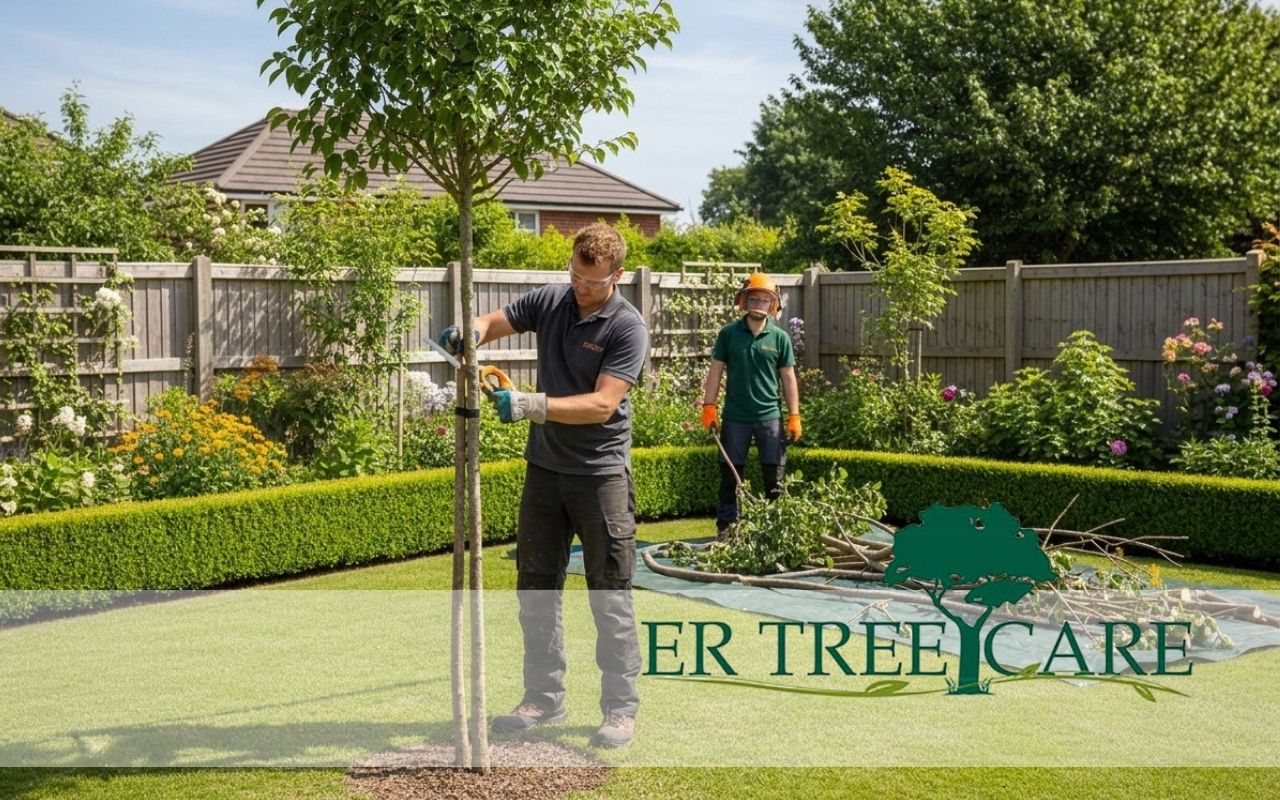
- Wear goggles, gloves, boots, and a hard hat if branches hang overhead.
- Keep children and pets indoors until the work is complete.
How Can You Cut A Small Tree Safely?
To remove small tree safely, start by choosing the best fall direction. Then, make a notch cut on the side where you want the tree to land.
Next, make a back cut on the opposite side, slightly above the notch. As the tree begins to move, step away calmly and let it fall into the open area.
Handle Stumps And Debris Without Extra Garden Stress
After cutting down small trees, the stump and branches still need attention. Small tree stump removal often starts with digging around the base and cutting the main roots.
Then, use a digging bar to loosen the stump and lift it out. For larger jobs, our tree stump removal guide explains safer options in simple terms.
- Chip small branches into mulch for garden beds.
- Cut larger pieces into manageable sections.
- Place leaves and twigs in approved yard waste bins.
Protect Nearby Plants And Prevent New Growth Later
Small tree removal should not harm the rest of your garden. Cover nearby flowers with a tarp, water plants the day before, and dig carefully around valued roots.
After unwanted tree removal, fill the open area with fresh soil and compost. Also, treat or grind the stump area so new shoots do not keep returning.
Frequently Asked Questions
Can I remove a small tree by myself?
Yes, some small trees can be removed by hand when the area is open and the trunk is thin. However, close structures, leaning trunks, and hidden roots can make the job unsafe.
What should I do with a tree near my home?
A small tree growing near house walls, pipes, or walkways should be handled carefully. Contact our team through the contact page if you are unsure about the safest next step.
How do I stop a stump from growing back?
Grinding the stump below ground level is often the best option. You can also treat fresh cuts with the right product, but always follow the label and keep people away from the area.
When is professional help a better choice?
Professional help is better when the tree leans toward a home, fence, driveway, or power line. With E R Tree Care LLC, you get clear advice before any risky work begins.
Where can I learn more about full removal?
For larger or more complex work, visit our tree removal planning guide or our local tree removal service page.
Refresh Your Garden After Tree Removal Work Ends
Once the tree and stump are gone, the open space can become useful again. Add native flowers, a small shrub, a bench, or stepping stones to improve the area.
At E R Tree Care LLC, we believe a safe garden should also feel welcoming. With the right plan, your yard can look cleaner, stay safer, and support healthy future growth.