


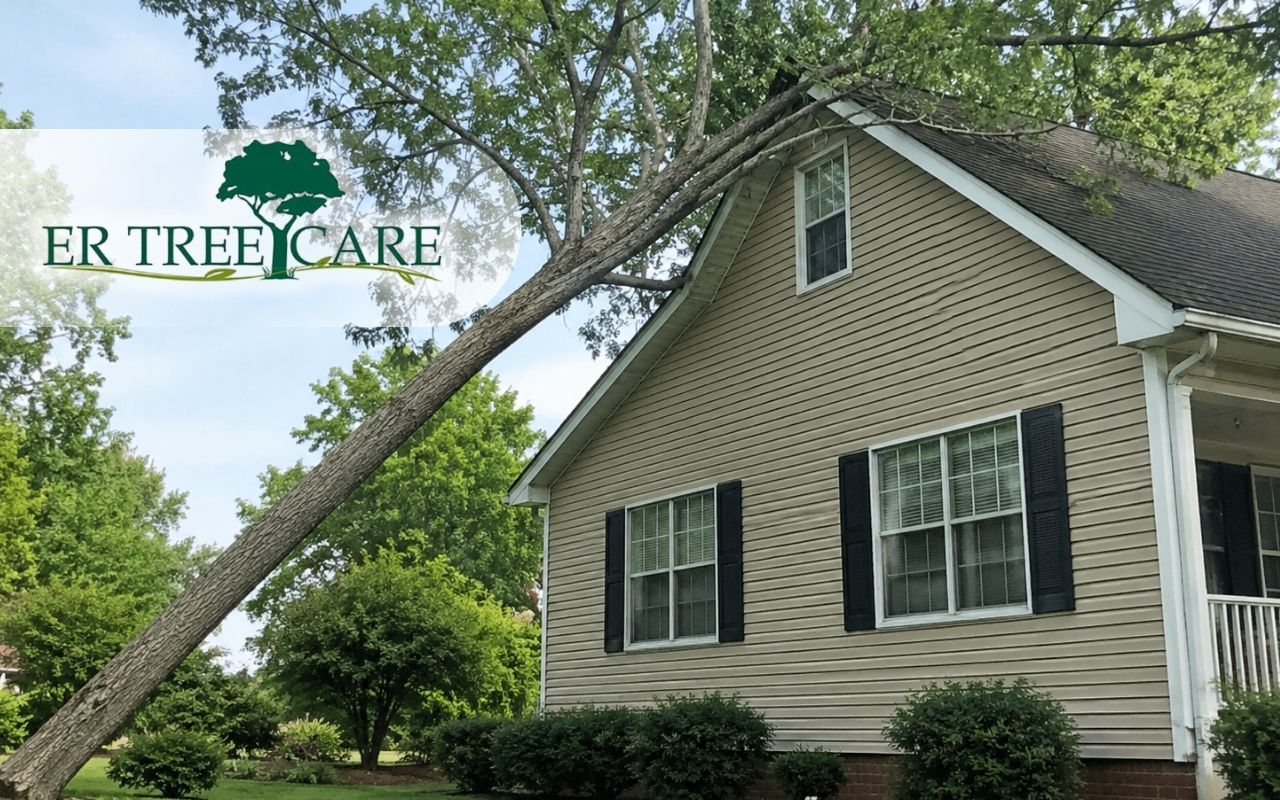
Helpful Solutions for a Tree Leaning Toward a House
A tree leaning toward house walls can feel stressful because it may put your home and family at risk. A small lean may look harmless at first. However, rain, soft soil, weak roots, or heavy limbs can make the problem worse.
At ER Tree Care, we help you look at the warning signs, understand the danger, and choose the safest next step. With the right action, you can protect your property while keeping your yard safe and beautiful.
Early signs your leaning tree needs closer attention
A tree leaning toward house windows, walls, or rooflines should be checked as soon as you notice movement. After strong wind or heavy rain, look for fresh cracks in the soil, raised roots, or a canopy that seems to shift more than before.
Also, watch the trunk for splitting bark, new bulges, or deep cracks. These signs can point to hidden root or trunk problems. For more help with warning signs, read our guide on spotting a weak or dying tree.
Why nearby trees can threaten your home quickly
A tree close to house danger can start with small signs, but the damage can grow fast. Branches may scrape siding, break windows, pull gutters loose, or rub against shingles. As a result, water can enter the home and create more repairs.
- Heavy limbs can fall during storms or strong wind.
- Roots may lose grip when soil stays wet too long.
- Branches near power lines can create serious safety risks.
This is why leaning tree risk should never be ignored. Acting early can lower repair costs and help prevent sudden damage during bad weather.
Simple checks before a leaning tree becomes unsafe
A tree leaning toward house areas may need close watching before a decision is made. You can mark a spot on the trunk and compare it with a fence, wall, or other fixed point. Then, check it again after rain or wind.
Look at the soil around the base. If the ground is lifting, sinking, or cracking, the roots may not be holding well. When a leaning tree is unsafe, the lean often gets worse, the canopy looks uneven, or roots begin to rise.
Professional support for safer tree care decisions today
Our team at ER Tree Care can inspect the trunk, roots, soil, and nearby structures before any work begins. A trained eye can help separate a manageable lean from a serious hazard. This makes your next step clearer and safer.
Sometimes pruning, cabling, or bracing may help reduce stress. However, some trees are too weak to keep. For safe planning, you can review our advice on handling a leaning tree safely.
Stabilizing roots, soil, and heavy tree canopies safely
A tree leaning after rain may be showing signs of weak soil or damaged roots. Wet ground can loosen the tree’s base, especially when the canopy is heavy. Therefore, checking both soil and root health is important before choosing support.
- Add mulch around the root area, but keep it off the trunk.
- Reduce foot traffic and vehicle weight near the roots.
- Improve drainage if water keeps pooling after storms.
Support systems may help some trees stand better, but they need proper placement and regular checks. When a tree leaning toward house spaces keeps moving, support alone may not be enough.
When removal becomes the safest choice for property
Leaning tree removal may be the best option when roots are damaged, the trunk is cracked, or the lean keeps increasing. Although saving a mature tree is often ideal, safety must come first when the home is at risk.
With ER Tree Care, you get clear guidance before removal is considered. We explain the condition of the tree and the safest path forward. You can also learn more about our safe tree removal service.
Frequently Asked Questions
Is every leaning tree dangerous?
Not every leaning tree is dangerous. Some trees grow with a natural lean and stay stable for many years. However, a new lean, raised roots, cracked soil, or trunk damage can show a higher leaning tree risk.
Why does my tree lean more after rain?
A tree leaning after rain may be reacting to soft soil or weakened roots. When the ground holds too much water, the roots can lose support. Because of that, the tree may shift more during wind or storms.
When should I call for help?
Call for help when the lean is new, growing, or pointing toward your home. You should also act fast if you see exposed roots, broken limbs, trunk cracks, or soil movement near the base.
Can a leaning tree be saved?
Some leaning trees can be saved with pruning, bracing, cabling, or better soil care. Still, the tree must be healthy enough to support those steps. A professional inspection can show whether saving it is safe.
How do I plan safe removal?
Safe removal starts with a full look at the tree, nearby structures, and fall direction. For general preparation, visit our guide on how tree removal is planned.
Protect your home with steady tree care
A tree leaning toward house areas should be checked before the problem becomes urgent. Regular inspections after storms, simple tracking, and timely pruning can reduce danger. In addition, keeping records of tree work helps you stay aware of changes.
- Check trees after heavy rain, wind, or visible soil movement.
- Schedule pruning to lower weight from weak branches.
- Contact our team when a lean changes or feels unsafe.
When you need clear guidance, reach our tree care team for support. At ER Tree Care, we take your concerns seriously and help you protect your home with safe, practical care.