

Easy Ways To Manage Tree Roots After Removal
Tree roots after removal can still affect your yard, even when the tree is gone. Leftover tree roots may block new plants, hold moisture unevenly, or attract pests as they break down under the soil.
At E R Tree Care LLC, we help homeowners understand what happens below ground after cutting a tree. With the right steps, you can protect your garden, support healthy soil, and prepare the area for safe new growth.
Old Roots Still Matter Beneath Your Garden
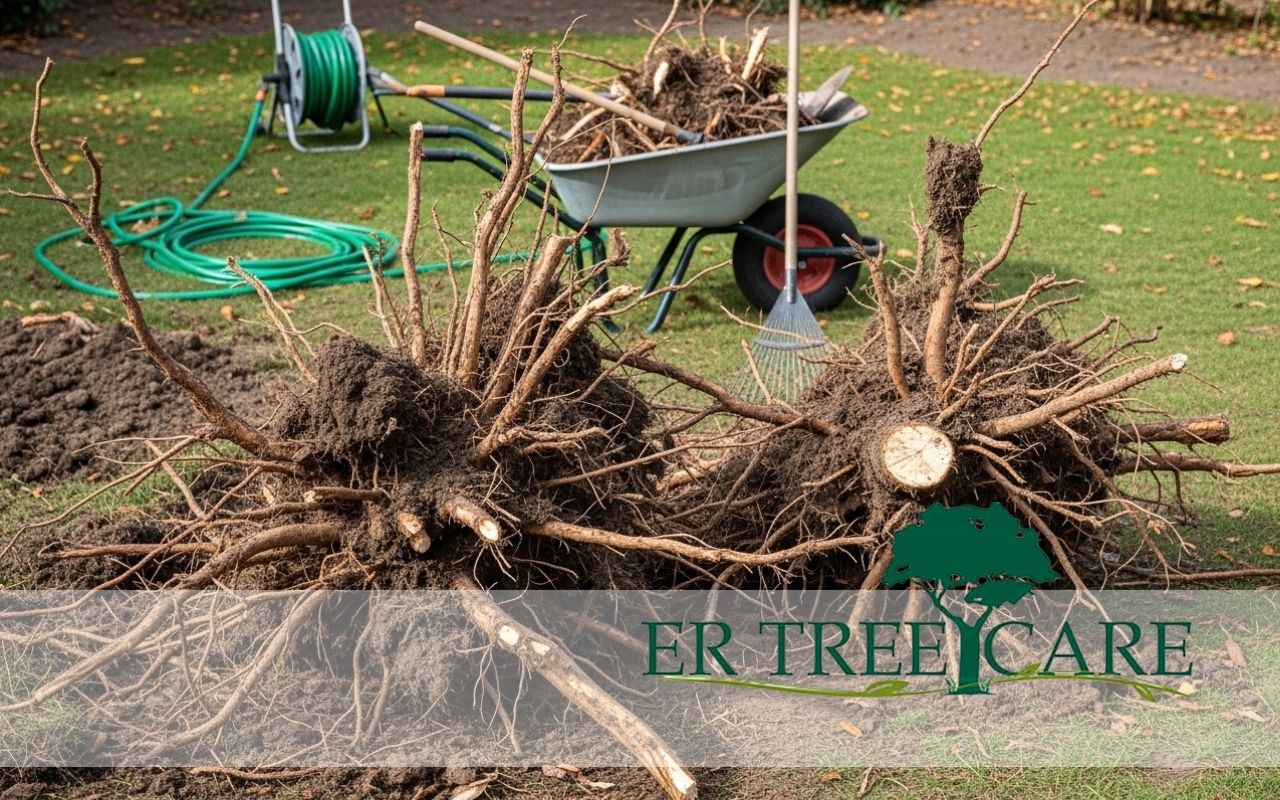
Tree roots after removal do not disappear right away. Once the trunk is cut, the roots stop receiving food from the tree. Then, they slowly begin to soften, crack, and break apart.
This process is called tree root decay. Small roots may break down within months, but larger roots can stay in the soil for years. Because of this, it helps to know whether you should wait or remove them sooner.
Common Problems Caused By Leftover Tree Roots
Leftover tree roots can make planting harder because they take up space underground. New flowers, shrubs, or vegetables may grow around them instead of spreading freely through soft soil.
- Roots may block new plant growth.
- Decaying wood may attract ants or termites.
- Soil may sink as old roots break down.
- Moisture may collect unevenly in garden beds.
For a better start, check the area before planting. Also, our guide on tree growth after stump cutting explains why some stumps and roots can still cause concern.
How Roots Break Down After Tree Cutting
Roots after tree is cut down slowly lose strength because they no longer receive energy. Soil life, moisture, and weather all help break them into smaller pieces over time.
Tree roots after removal may decay faster in warm, damp soil. However, thick roots can remain firm for a long time. Therefore, the size of the tree and the soil condition both affect your next steps.
Practical Tools For Removing Old Tree Roots
Removing old tree roots is easier when you use the right tools. A shovel, pruning saw, loppers, and gloves can help with small or medium roots near the surface.
- Use a shovel to clear soil around roots.
- Cut smaller roots with loppers or a pruning saw.
- Wear gloves and eye protection during the work.
- Use a pry bar for roots that are hard to lift.
For larger work, stump grinding may be a safer option. You can read our guide on choosing a stump grinding team before deciding how to handle heavy roots.
Safe Steps For Stump And Root Removal
Stump and root removal starts by clearing soil around the old stump. Next, cut exposed roots into smaller sections so they are easier to lift and remove.
Tree roots after removal can be stubborn, so avoid pulling large roots with force. Instead, loosen the soil, cut sections carefully, and remove them piece by piece. For more help, see our tree stump removal guide.
Better Soil Care After Root Cleanup Work
After removing old tree roots, the soil may need care before new planting. Clear away wood chips, root pieces, and loose debris so the area can settle evenly.
- Add compost to restore nutrients.
- Fill low spots with fresh topsoil.
- Water the area so the soil settles.
- Wait before planting if the ground keeps sinking.
With E R Tree Care LLC, our team explains simple options before the work begins. Good soil care helps your yard recover after stump and root removal and gives new plants a stronger place to grow.
Frequently Asked Questions
Will tree roots die after the tree is removed?
Most roots die after the tree is removed because they no longer receive food from the trunk and leaves. However, some roots may send up shoots if the stump is still active.
How long does tree root decay usually take?
Tree root decay can take months for small roots and several years for larger roots. Moist soil, warm weather, and healthy soil life can help roots break down faster.
Can I plant over old tree roots?
You can plant over small decayed roots, but large roots may block new growth. It is better to remove big pieces or plant slightly away from the old stump area.
Do leftover tree roots attract pests?
Yes, leftover tree roots can attract ants, termites, or other pests as the wood softens. Checking the area early can help you avoid bigger problems later.
When should I call a tree care team?
Call a tree care team when roots are large, deep, close to hard surfaces, or hard to remove safely. When customers contact E R Tree Care LLC, we explain the safest next step.
Plan Your Yard’s Next Healthy Growing Season
Tree roots after removal do not have to stop your garden plans. With careful cleanup, better soil care, and smart planting, your yard can become a healthy space again.
For larger stumps or difficult roots, our stump grinding service in Louisville can support a cleaner start. At E R Tree Care LLC, we focus on clear guidance so your outdoor space feels safe, open, and ready for new growth.